2025
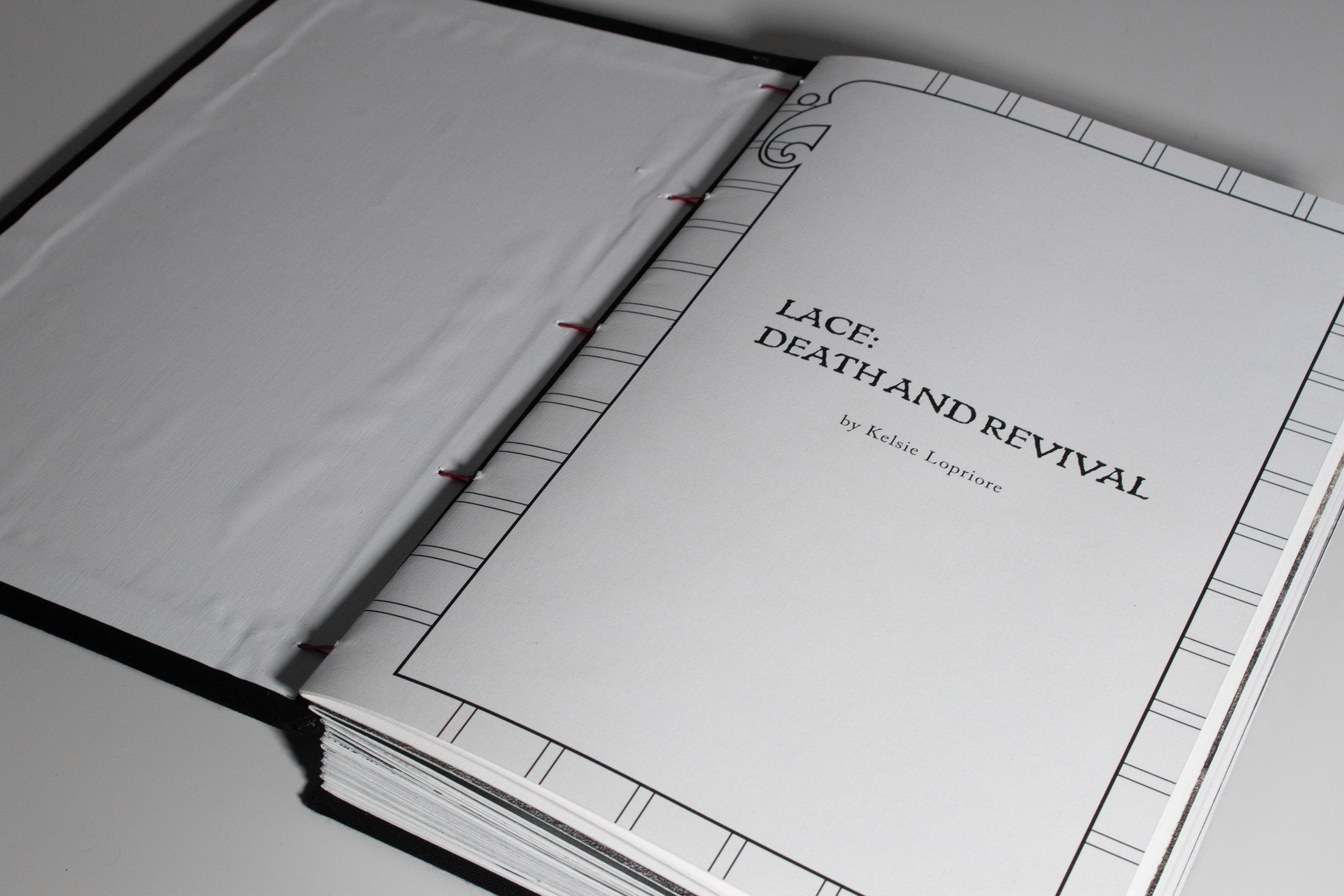
Lace: Death and Revival
Overview
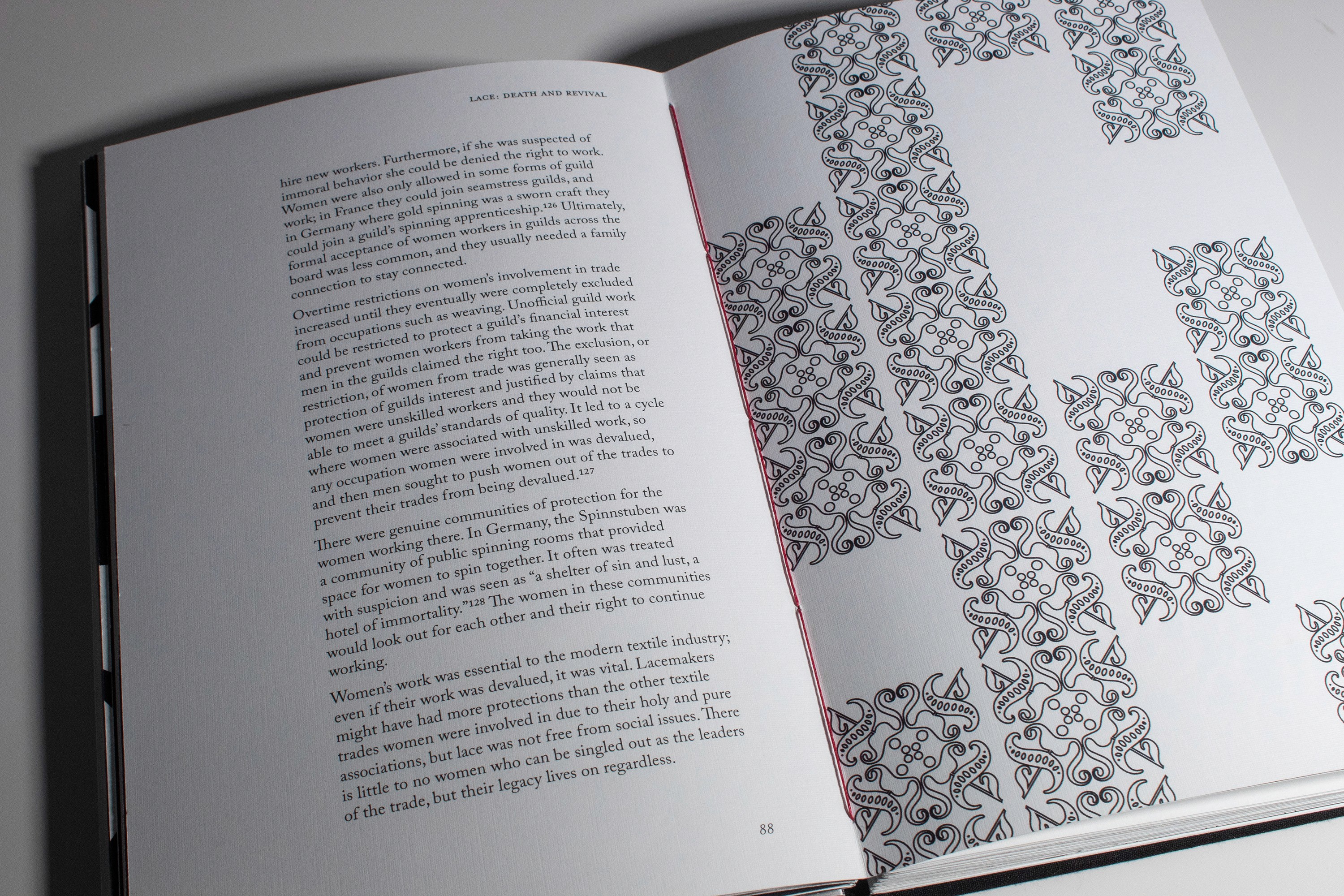
The International Society of Typographical Design [ISTD] releases five briefs every year for students to work on and submit for their Student Assessment Scheme. Lace: Death and Revival was created in response to their brief "Trades Matter". I connected lacemaking and typography focusing on their shared and similar qualities, and finding what was the best way to show lace while the final piece remained typographical.
My understanding of the provided brief was that there is an increased interest in a circular economy and slowing down production in a way to fix consumer habits that are increasingly having a negative impact on the world and environment. Traditional crafts are vanishing and increasingly becoming endangered, but these are industries rooted in community and the people. The brief asks why can’t crafts once again play a vital role in society. We are asked to investigate the trade, its history, techniques, and role in society. From there, we should evaluate its potential contributions to sustainability and community today. So, through this book I argue that lacemaking should be a craft continued today.
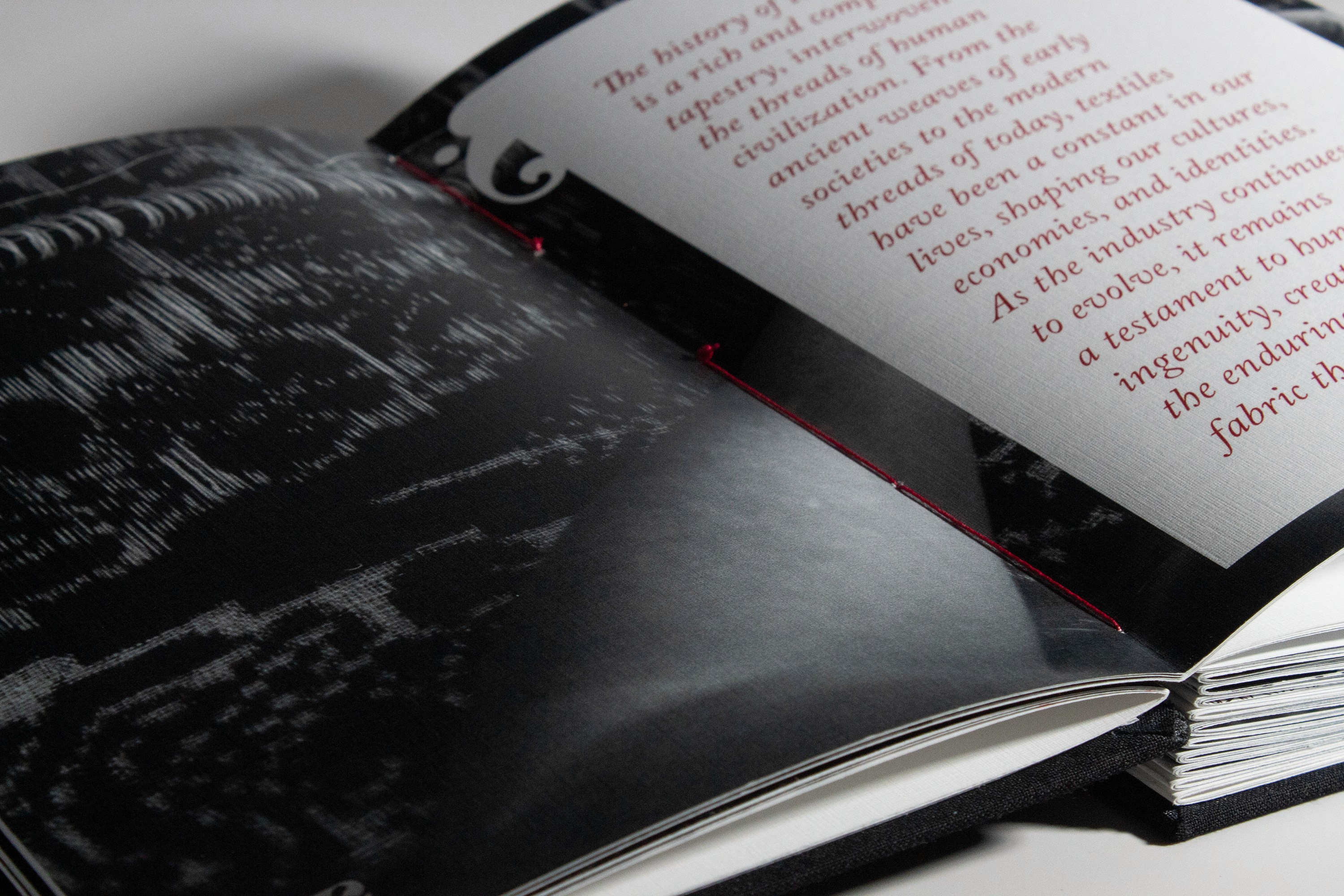
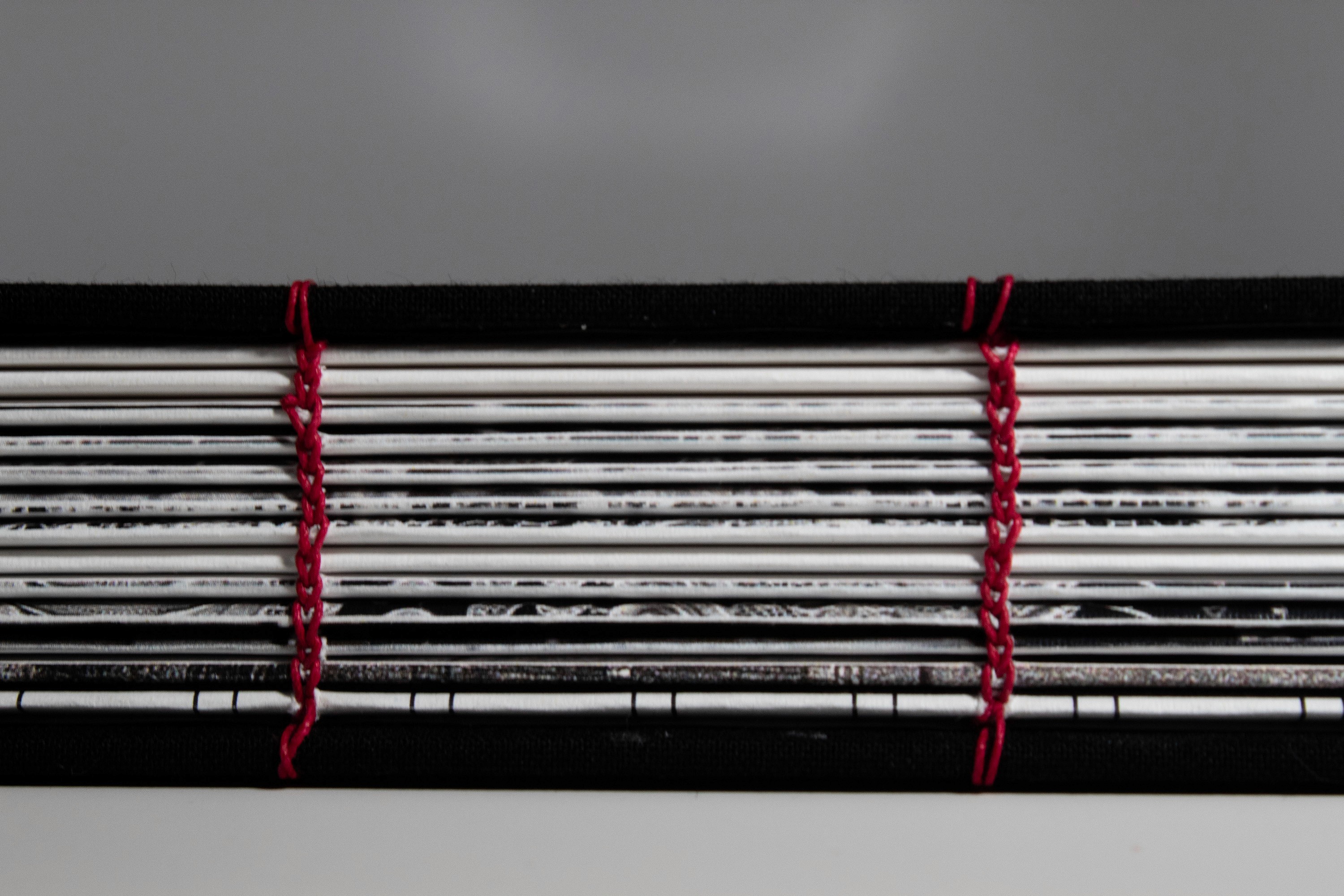
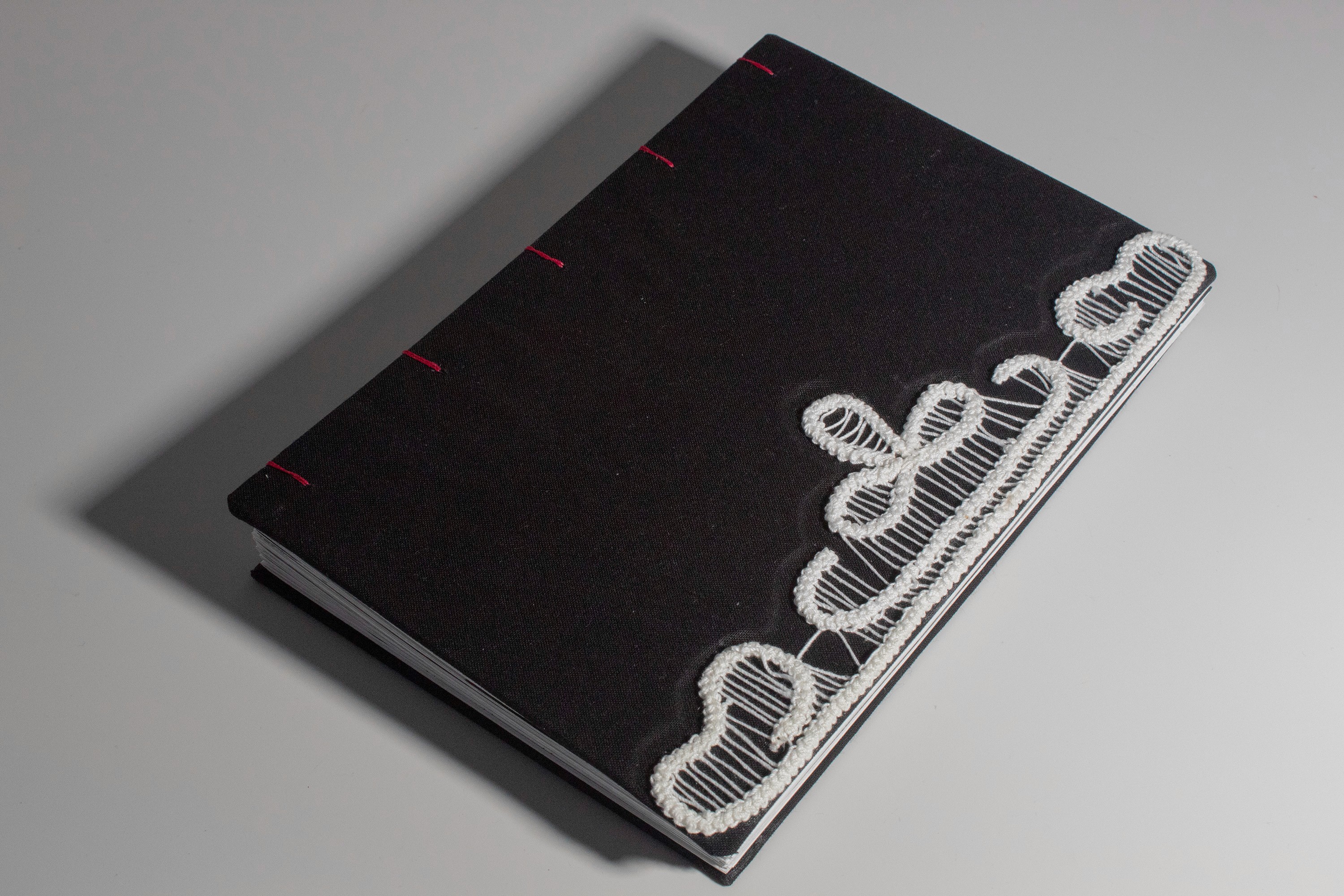
The book is about 200 pages long. It was written and designed by me, and I hand sewed the spine and the piece of lace for the cover.
Concept
The word text and the word textile both come from the same latin verb texere which means to weave. Textiles weave yarn and thread to make fabric–text weaves words together to tell a story.
Women are the backbone of the textile industry, but much of their contributions were never noted down in history. That is especially true in the lacemaking industry. Lace was considered both a domestic and commercial opportunity for women–lacemaking was seen as a way for women to be modest, pious, pure, and it signified the ideal skill for women as homemakers. It was something they could do while still caring for their children and other domestic labors of the house.
This book tells the story of the textile industry with emphasis on lace, women’s involvement, and what led to its decline. It will discuss the revival of lace in the contemporary day, but also back in the 19th century when its decline first started. A spread will be dedicated to each recorded type of lace and its assumed origins. The book is split into four sections based on the four believed life milestones in the Catholic order, referencing the four women in my family who crocheted, and then split into four patterns per each section.
Full Walkthrough
Kelsie Lopriore
Graphic Designer
©2026 BY KELSIE LOPRIORE